Oqood registration in Dubai is the process that records an off-plan property sale on the Dubai Land Department’s (DLD) interim register, before the building is finished. The word “Oqood” means “contracts” in Arabic, and the certificate it produces is the buyer’s first official proof of ownership.
If you are buying off-plan, Oqood matters more than most buyers realise. It stops a developer from selling the same unit twice, it is needed to resell or mortgage the unit before handover, and it is later replaced by the title deed. This guide explains how Oqood works, what it costs, the documents involved, how to check it and the mistakes to avoid.
Key takeaways
- Oqood is the DLD’s interim register for off-plan sales; the certificate is your initial proof of ownership.
- The developer registers the sale after the SPA is signed, using your passport and other documents.
- The registration fee is usually 4% of the purchase price, the same rate as the DLD transfer fee on ready homes, plus small admin fees.
- Oqood is replaced by a title deed after handover and full payment.
In this guide
- What is Oqood?
- Why Oqood matters for buyers
- How Oqood registration works, step by step
- Documents you will need
- Oqood fees and costs
- How to check your Oqood registration
- Oqood and resale before handover
- From Oqood to title deed
- What if the project is delayed or cancelled?
- Common Oqood mistakes to avoid
- How SAT Real Estate can help
- Is Oqood registration in Dubai enough to protect you?
What is Oqood?
Oqood is the system the Dubai Land Department uses to register off-plan property sales. When you buy a unit that is not yet built, there is no title deed yet, because the property does not exist as a finished unit. Oqood fills that gap by recording your purchase on an interim register.
The Oqood certificate is issued digitally. It usually shows the unit number, project name, buyer and developer names, purchase price, payment schedule and a DLD reference. The digital record is what counts.
Every off-plan sale in Dubai must be registered through Oqood. Our guide to buying off-plan property in Dubai explains where Oqood fits in the wider buying process.
Why Oqood matters for buyers
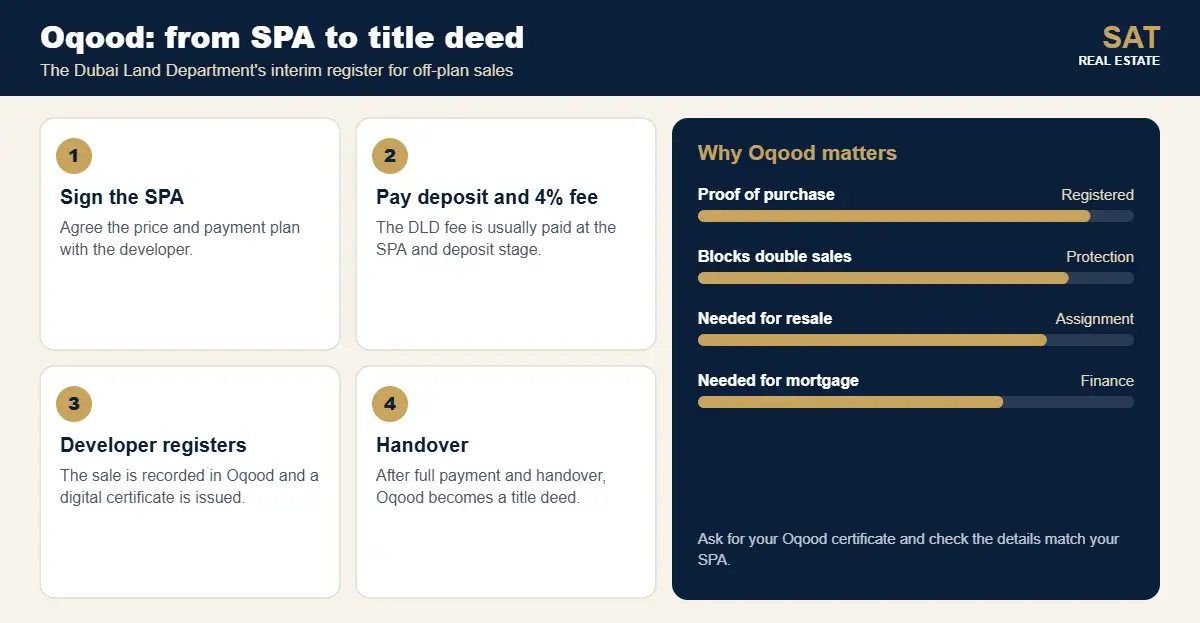
- Proof of purchase. It is official evidence that the unit is yours, recorded by the government.
- Protection from double sales. Once registered, the developer cannot legally sell the same unit to someone else.
- Resale before handover. You need Oqood to sell or assign the unit before completion.
- Finance. Banks need an Oqood registration before they will lend against an off-plan unit.
- Dispute evidence. If something goes wrong, the registered contract supports your position.
Oqood works alongside the escrow system, which holds buyer payments in a project account released against construction progress. Read our guide to escrow accounts for off-plan property for more.
How Oqood registration works, step by step
- Reserve the unit. Pay the booking amount and sign the reservation form.
- Sign the Sale and Purchase Agreement (SPA). The SPA sets out the price, payment plan, handover date and the developer’s obligations.
- Pay the deposit and the DLD fee. The 4% fee is usually paid at this stage, together with the first instalment.
- The developer registers the sale. The developer submits the sale through the DLD system with your documents.
- DLD reviews and approves. This usually takes from a few days to a couple of weeks.
- You receive the Oqood certificate. It arrives digitally, by email or a portal link.
Some developers register straight after the SPA is signed. Others wait until a set percentage of the price has been paid, often 20% to 25%. Check the timing in your SPA and ask the developer when to expect your certificate.
Documents you will need
| Document | Notes |
|---|---|
| Passport copy | For all buyers named on the SPA |
| Emirates ID | If you are a UAE resident |
| Signed SPA | The developer files it with the registration |
| Proof of payment | Deposit and DLD fee receipts |
| Company documents | If you buy through a company |
| Power of attorney | If someone signs on your behalf |
If you cannot be in Dubai to sign, a properly drafted power of attorney can help. Read our guide to power of attorney for property in Dubai.
Oqood fees and costs
The main cost is the DLD registration fee of 4% of the purchase price. On an off-plan purchase it is paid at the Oqood stage rather than at handover. Some developers run promotions where they pay part or all of this fee, so read the offer terms carefully.
On top of the 4%, expect small admin and knowledge fees, and any fees the developer charges for processing. Ask for a written breakdown before you sign. Our guide to the cost of buying property in Dubai lists every cost a buyer should budget for.
How to check your Oqood registration
Once you have your certificate, check that every detail matches your SPA:
- Your name and the names of any co-buyers, spelled as in your passport.
- Unit number, floor and project name.
- Purchase price and payment schedule.
- The DLD reference number.
You can also confirm the registration through the DLD’s official channels, such as the Dubai REST app. If a few weeks pass after paying the fee without a certificate, follow up with the developer in writing and keep a record.
Oqood and resale before handover
If you want to sell before the building is finished, the sale is an assignment of your Oqood registration to a new buyer. The developer usually has to approve the transfer, and many SPAs require you to have paid a set share of the price first. The DLD then updates the register in the new buyer’s name.
Read our guide on how to sell off-plan property before handover for the full process, fees and timing.
From Oqood to title deed
Oqood is temporary. When construction is complete, the building is handed over and you have paid the full price, the Oqood registration is replaced by a title deed issued by the DLD. If you have a mortgage, the bank’s interest is registered against the title deed.
Before you accept the keys, inspect the unit carefully. Our guide to property snagging in Dubai covers what to check at handover.
What if the project is delayed or cancelled?
Oqood and escrow together give off-plan buyers important protection if a project runs into trouble. Your registered contract and the funds held in escrow form the basis of any claim. If your project is late, read our guide on what to do if an off-plan project is delayed in Dubai, and get advice before you stop making payments.
Common Oqood mistakes to avoid
- Assuming the reservation form is enough. It is not. Only Oqood registration records your purchase with the DLD.
- Not checking the details. A misspelled name or wrong unit number can cause problems at resale or handover.
- Not knowing who pays the 4%. Confirm in writing whether the developer is covering any part of it.
- Paying large sums before registration. Make sure registration is underway as payments build up.
- Losing track of the certificate. Keep a digital and printed copy with your SPA and receipts.
How SAT Real Estate can help
We help buyers check developers, review SPAs, confirm Oqood registration and plan resale or handover. If you are weighing an off-plan purchase, book a private investment consultation, or explore our off-plan investment advisory.
Is Oqood registration in Dubai enough to protect you?
Oqood registration in Dubai is a strong foundation, because it records your purchase with the government, blocks double sales and is needed for resale and finance. But it works best alongside the other safeguards: a RERA-registered project, an escrow account, a clear SPA and a developer with a good delivery record. Check all of them before you pay.
The Dubai Land Department publishes guidance for buyers at dubailand.gov.ae, and it is worth reading before you sign.
Related reading
- Buying off-plan property in Dubai
- Escrow accounts for off-plan property
- Cost of buying property in Dubai
- Sell off-plan property before handover
- Off-plan vs ready property in Dubai
Frequently asked questions
1. What is Oqood in Dubai?
Oqood is the Dubai Land Department’s interim register for off-plan property sales, and the certificate is the buyer’s initial proof of ownership.
2. Who registers Oqood?
The developer registers the sale through the DLD system, using documents supplied by the buyer.
3. How much is the Oqood fee?
Usually 4% of the purchase price, plus small admin and knowledge fees.
4. When is Oqood registered?
After the SPA is signed. Some developers register straight away, others once 20% to 25% of the price has been paid.
5. How long does Oqood registration take?
DLD review usually takes from a few days to a couple of weeks.
6. Is the Oqood certificate the same as a title deed?
No. Oqood is temporary and is replaced by a title deed after handover and full payment.
7. Can I sell an off-plan unit with an Oqood certificate?
Yes. The Oqood registration can be assigned to a new buyer, usually with developer approval.
8. Do I need Oqood to get a mortgage?
Yes. Banks require the sale to be registered through Oqood before lending against an off-plan unit.
9. How do I check my Oqood registration?
Check the certificate details against your SPA, and confirm the registration through the DLD’s official channels such as the Dubai REST app.
10. What protects me if the project is delayed?
Your Oqood registration, the SPA and the project’s escrow account together form the basis of your protection and any claim.