
Property snagging in Dubai is the detailed inspection of a newly completed home to find defects, damage and unfinished work before you accept handover from the developer. It is the moment when you have the most leverage to get problems fixed, so it is worth doing carefully, whether you plan to live in the home or rent it out.
Many off-plan buyers wait years for handover and then rush the final step. A good snagging inspection protects your investment, your tenant’s first impression and your resale value. This guide covers when to snag, a room-by-room checklist, how to report defects, the developer’s legal liability and when to use a professional inspector.
Key takeaways
- Snagging is your chance to log defects before you accept handover, while the developer’s team is focused on your unit.
- Check walls, doors, windows, floors, kitchen, bathrooms, electrical, AC and balcony systematically.
- Under Dubai Law No. 6 of 2019, developers are liable for structural defects for 10 years from completion and for installation defects for one year from handover.
- Use a professional snagging company if you live abroad, lack time or are buying a large or high-value home.
In this guide
- What is snagging?
- When to snag
- Room-by-room snagging checklist
- What to bring on inspection day
- How to record and report defects
- Developer liability under Dubai law
- Doing it yourself vs hiring a professional
- Snagging for investors who let their property
- Common mistakes to avoid
- What if the developer does not fix the defects?
- Is property snagging in Dubai worth the effort?
What is snagging?
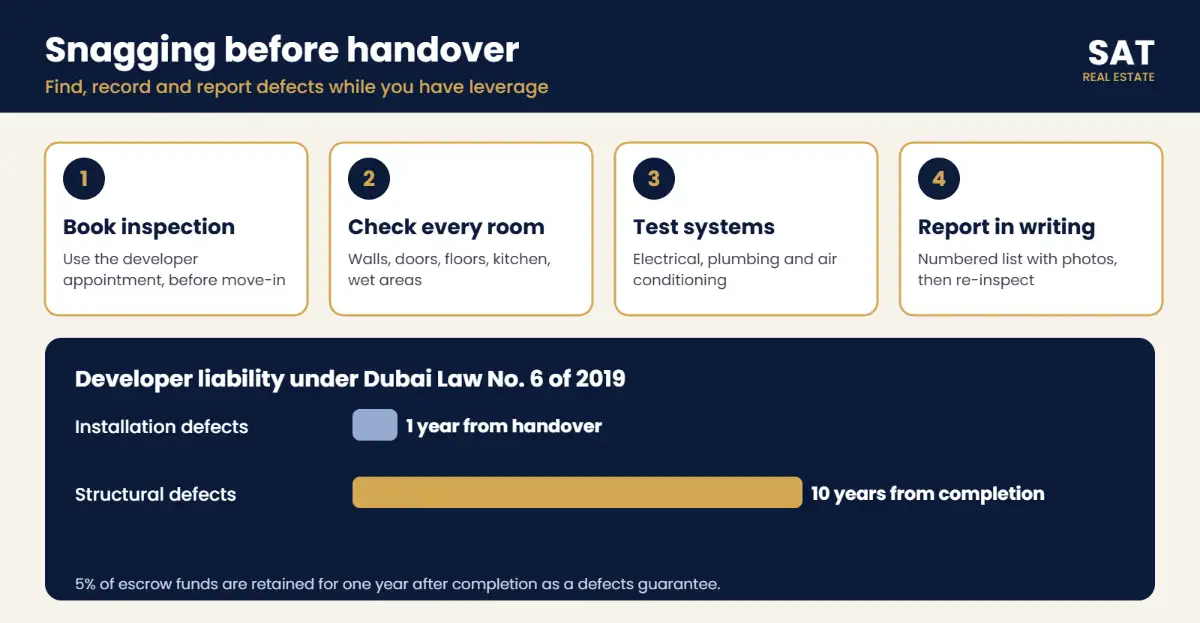
A snag is any defect, damage or unfinished item in a new home: a cracked tile, a door that does not close, a leaking tap or an air-conditioning unit that does not cool. Snagging is the process of finding these items, recording them and asking the developer to fix them.
The aim is not to find fault with every tiny mark. It is to document genuine defects against the agreed specification, while there is a clear process to get them addressed.
When to snag
Timing matters.
- Use the developer’s inspection appointment. Many developers offer an inspection before key collection or final acceptance. Book it and attend.
- Read your paperwork first. Your Sale and Purchase Agreement (SPA) and handover notice explain the process and what counts as a defect.
- Inspect before you move in or furnish. Furniture and boxes hide floors and walls.
- Re-inspect after repairs. Only close an item once you have seen the fix.
If you are paying a balance at handover, check how the payment and acceptance steps interact. Our guide to post-handover payment plans in Dubai explains how staged payments work.
Room-by-room snagging checklist
Work through the home in the same order every time so nothing is missed.
Walls, ceilings and paint
- Cracks, dents and chips.
- Uneven paint, patchy coverage or stains.
- Signs of water ingress, such as bubbling paint or damp patches.
Doors and windows
- Doors open, close and lock smoothly, and are properly aligned.
- Handles, hinges and locks work and are secure.
- Window and balcony door seals are intact, and sliding doors run smoothly.
Floors and joinery
- Chipped, cracked or hollow-sounding tiles.
- Uneven transitions between rooms.
- Gaps in skirting boards and wardrobe joinery.
Kitchen
- Cabinet doors and hinges are aligned and close properly.
- Worktop joints and silicone are neat and sealed.
- Sink and taps work without leaks.
- Appliances match the specification and switch on.
Bathrooms and plumbing
- No leaks under sinks or around toilets.
- Seals around showers and baths are complete.
- Water drains properly, and there is no pooling in wet areas.
- Hot and cold water both run.
Electrical
- Switches, fixed lighting and sockets work.
- Any fault should be checked by a qualified professional, not tested by hand.
Air conditioning
- Each unit cools properly.
- No unusual noise, vibration or water leakage.
Balconies
- Tiles are in good condition and water drains away from the door.
- Drainage outlets are clear.
- Railings and balustrades are secure.
What to bring on inspection day
A little preparation makes the inspection faster and more thorough.
- A copy of your SPA and specification sheet, so you can check finishes and appliances against what was promised.
- The floor plan, to confirm room sizes and layout.
- A phone with a good camera and a torch, for dark corners, cupboards and under sinks.
- A spirit level and a tape measure, to check that worktops, doors and tiles are level and sizes match.
- A small plug-in socket tester, if you are comfortable using one, or leave electrical checks to a professional.
- Masking tape or coloured stickers, to mark defects on walls and floors so the repair team can find them.
- A notebook or snagging app, to number and describe each item as you go.
Allow enough time. A one-bedroom apartment can take an hour or more to check properly, and a villa can take most of a day. Visit in daylight if you can, as natural light makes paint and surface defects easier to spot. If the power, water and air conditioning are not yet connected, ask the developer when they will be, because many of the most important checks need them working.
How to record and report defects
A clear report gets faster results.
- Photograph every item, with a wide shot to show where it is and a close-up of the defect.
- Number each item and note the room and a short description.
- Submit the list in writing to the developer’s handover team, using their format if they have one.
- Keep copies of the report and every reply.
- Agree a timeline for repairs and a date for re-inspection.
The developer’s team normally reviews the report, decides which items it accepts and schedules repairs. Timing depends on the project, the SPA and the type of defect.
Developer liability under Dubai law
Dubai Law No. 6 of 2019 sets two key periods of developer liability.
| Type of defect | Liability period |
|---|---|
| Structural defects | 10 years from the project completion certificate |
| Installations (mechanical, electrical, sanitary and sewerage) | 1 year from handover |
If an owner refuses possession, the one-year period can instead run from the project completion certificate. DLD guidance also says 5% of the project’s escrow funds are retained for one year after completion as a guarantee for defects.
These periods mean snagging is not your only chance to report problems. But defects are easiest to fix, and least disputed, when they are logged at handover.
Doing it yourself vs hiring a professional
| Option | Best for | Watch for |
|---|---|---|
| Do it yourself | Smaller apartments, buyers in Dubai with time | Easy to miss hidden or technical defects |
| Professional snagging company | Overseas buyers, villas, high-value homes | Check scope, re-inspection and report turnaround |
When you hire a professional, check whether the inspection covers mechanical and electrical systems, whether re-inspection is included, and how quickly you will get the report. Ask to see a sample report before you book. A good report lists each defect with a photo, location and severity, so the developer’s team can act on it quickly.
Snagging for investors who let their property
If you plan to rent out the home, snagging protects your income. A tenant who moves into a home with leaks or faulty AC will call for repairs straight away, and may not renew. A clean handover means you can let the unit sooner and with fewer early complaints.
Once repairs are done, record the condition of the home in an inventory before the first tenant moves in. That makes the end-of-lease deposit discussion much easier. Our property management in Dubai team can coordinate snagging, repairs and letting for owners who live abroad.
Common mistakes to avoid
- Accepting handover without inspecting the unit.
- Inspecting after furniture has been delivered.
- Reporting defects verbally instead of in writing.
- Closing items before seeing the repair.
- Ignoring the SPA’s handover terms.
Each of these can leave you paying for repairs the developer should have handled. A careful hour at handover, with photos and a written list, is far cheaper than chasing repairs months later once a tenant is living in the home.
What if the developer does not fix the defects?
Keep a clear written record of every report, reply and repair. Follow up in writing if timelines are missed. For structural, safety-related or disputed issues, get technical or legal advice. Our guides on buying off-plan property in Dubai and what to do when an off-plan project is delayed explain your wider rights as an off-plan buyer.
Is property snagging in Dubai worth the effort?
Property snagging in Dubai is always worth the effort. It costs a few hours, or a modest fee for a professional, and it protects a purchase that may be worth millions of dirhams. A clean handover means fewer surprises, happier tenants and a stronger position when you sell.
If you are approaching handover and want help with snagging, letting or planning your next step, book a private investment consultation. If you are thinking about selling instead, our sell, hold or reinvest service can help you decide.
Related reading
- Buying off-plan property in Dubai
- Post-handover payment plans in Dubai
- What to do when an off-plan project is delayed
- Selling off-plan property before handover
- Cost of buying property in Dubai
Frequently asked questions
1. What is snagging in Dubai?
It is the inspection of a newly built home to find and record defects before you accept handover from the developer.
2. When should I do a snagging inspection?
Before you accept handover or move in, ideally at the developer’s inspection appointment and before any furniture arrives.
3. What should I check during snagging?
Walls, doors, windows, floors, kitchen, bathrooms, plumbing, electrical, air conditioning and balconies.
4. How long is a developer liable for defects in Dubai?
Under Dubai Law No. 6 of 2019, 10 years from the project completion certificate for structural defects, and one year from handover for installation defects.
5. Should I hire a professional snagging company?
It helps if you live abroad, lack time or are buying a villa or high-value home. Check the scope and whether re-inspection is included.
6. Can I refuse handover because of snags?
Not every snag prevents handover. Check your SPA and handover notice, and log defects in writing either way.
7. How do I report snags to the developer?
Submit a written, numbered list with photos to the developer’s handover team, and keep copies of all replies.
8. What happens after I submit a snag list?
The developer reviews it, accepts items and schedules repairs. You should re-inspect before closing each item.
9. Is part of the developer’s money held back for defects?
DLD guidance says 5% of the project’s escrow funds are retained for one year after completion as a defects guarantee.
10. Can I report defects after handover?
Yes, within the liability periods, but defects are easiest to resolve when logged at handover.